A worked example — an abutment pile-cap footing
An abutment pile cap carries an eccentric bridge-seat wall down to its piles, under both vertical load and horizontal earth pressure. The offset, two-way load path makes the cap a D-region — designed with a strut-and-tie model in AStrutTie. (Pile cap and pile footing are the same member; the codes use both names.)
Based on the AStrutTie 2020 Technical Book, Example 3.1 (abutment on pile foundation), run under ACI 318-25.
Given
- fck = 24 MPa (concrete)
- fy = 400 MPa (steel)
- φ = 0.75 (strength-reduction factor)
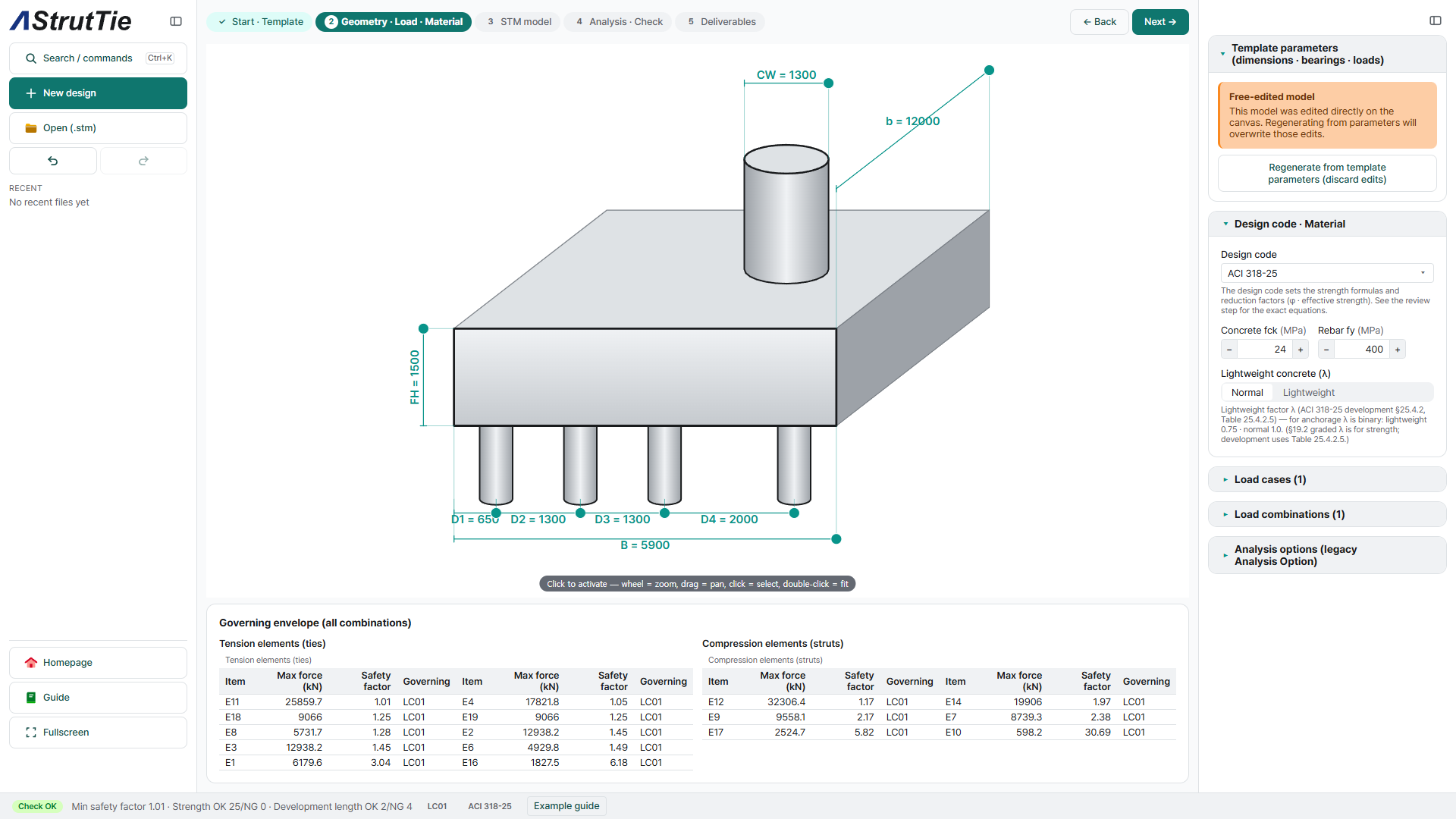
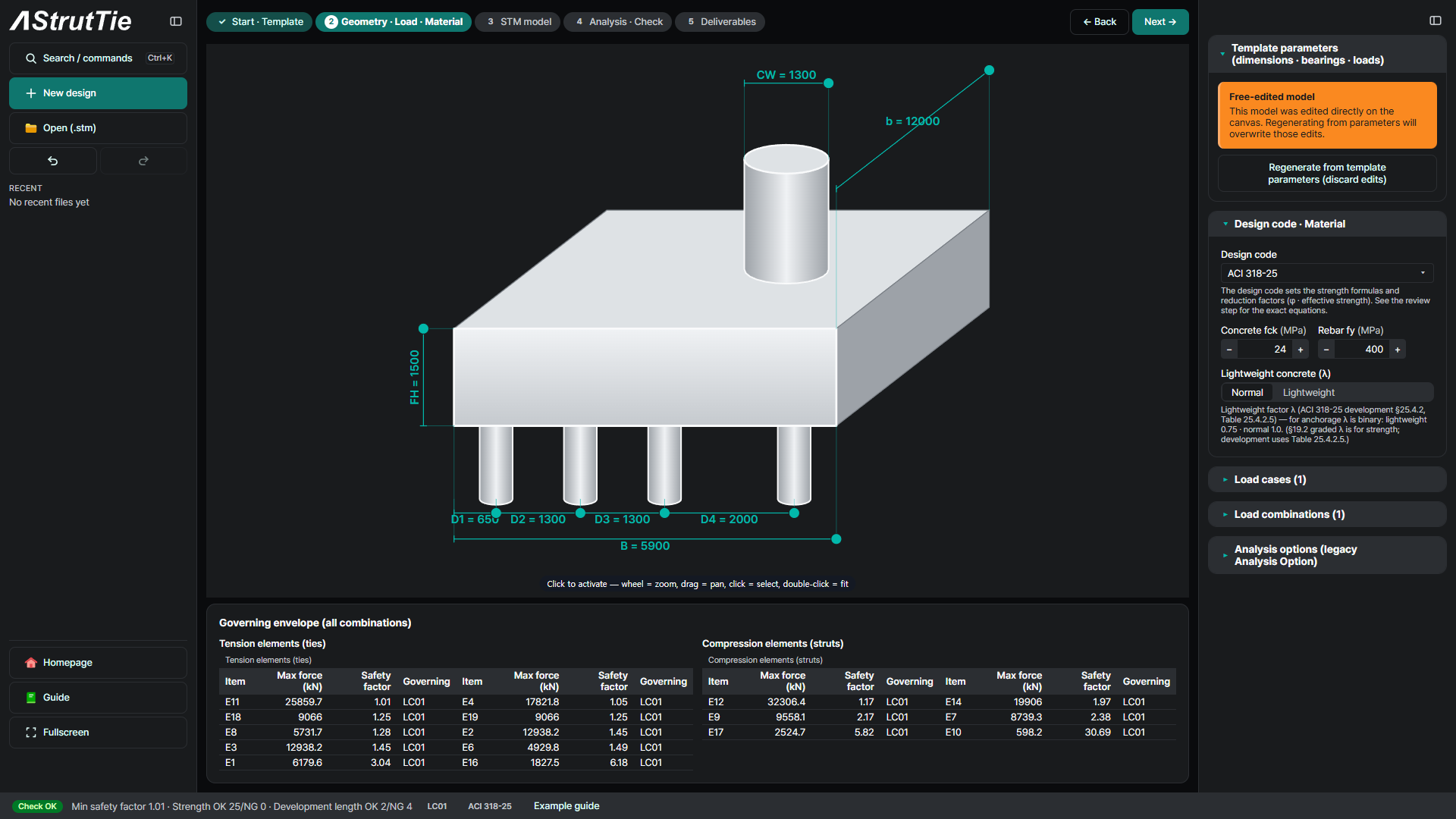
- Footing dimensions, pile layout & wall loads (vertical + horizontal) — the Technical Book's values, from AStrutTie's built-in Example 3.1 file (see the drawing below)
The problem
An abutment footing carries an eccentric wall down to a pile group, under vertical load and horizontal earth pressure. Its geometry, pile layout and wall loads define the design — typed straight onto the drawing.
Build the model — the Technical Book's strut-and-tie model
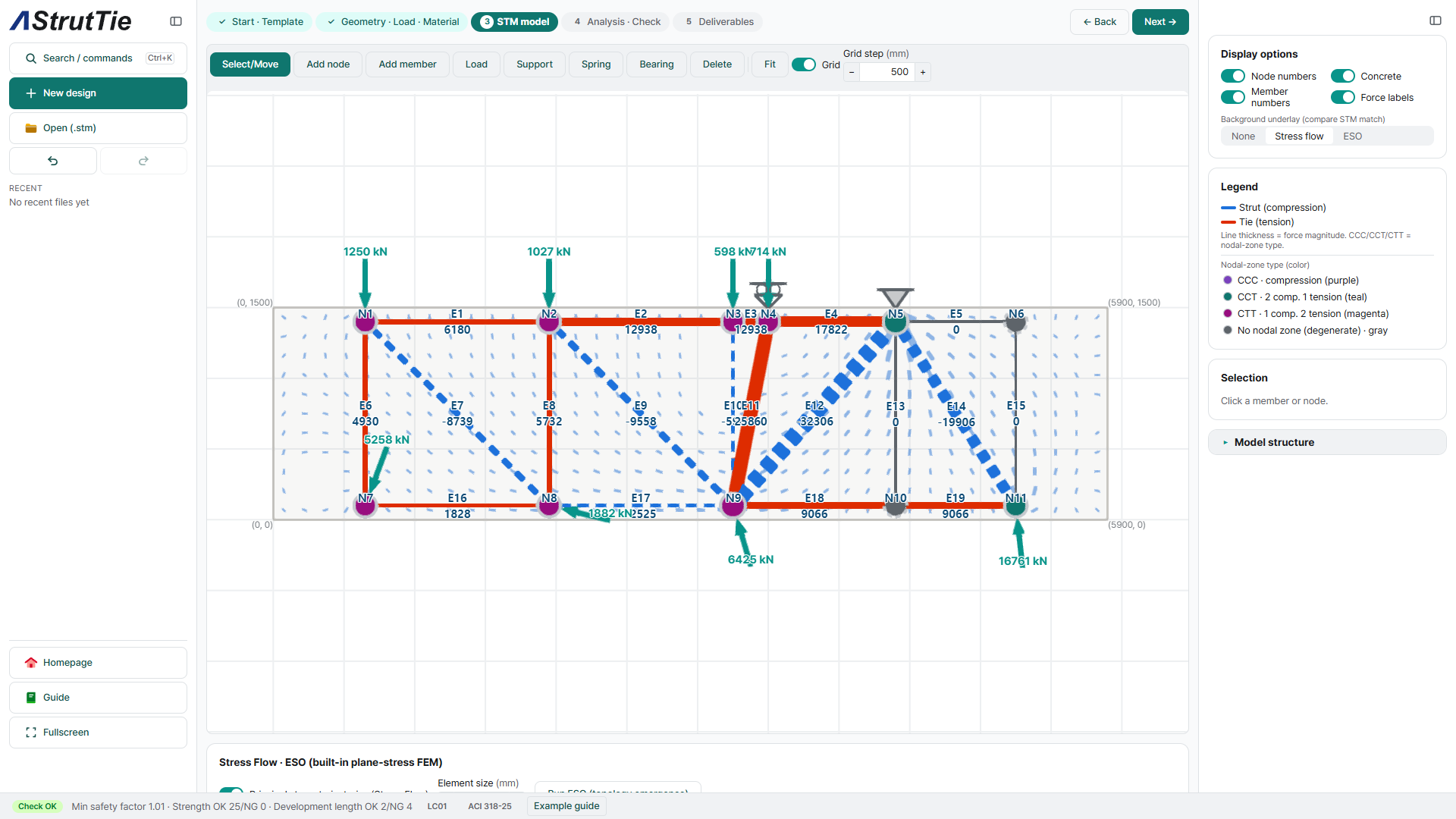
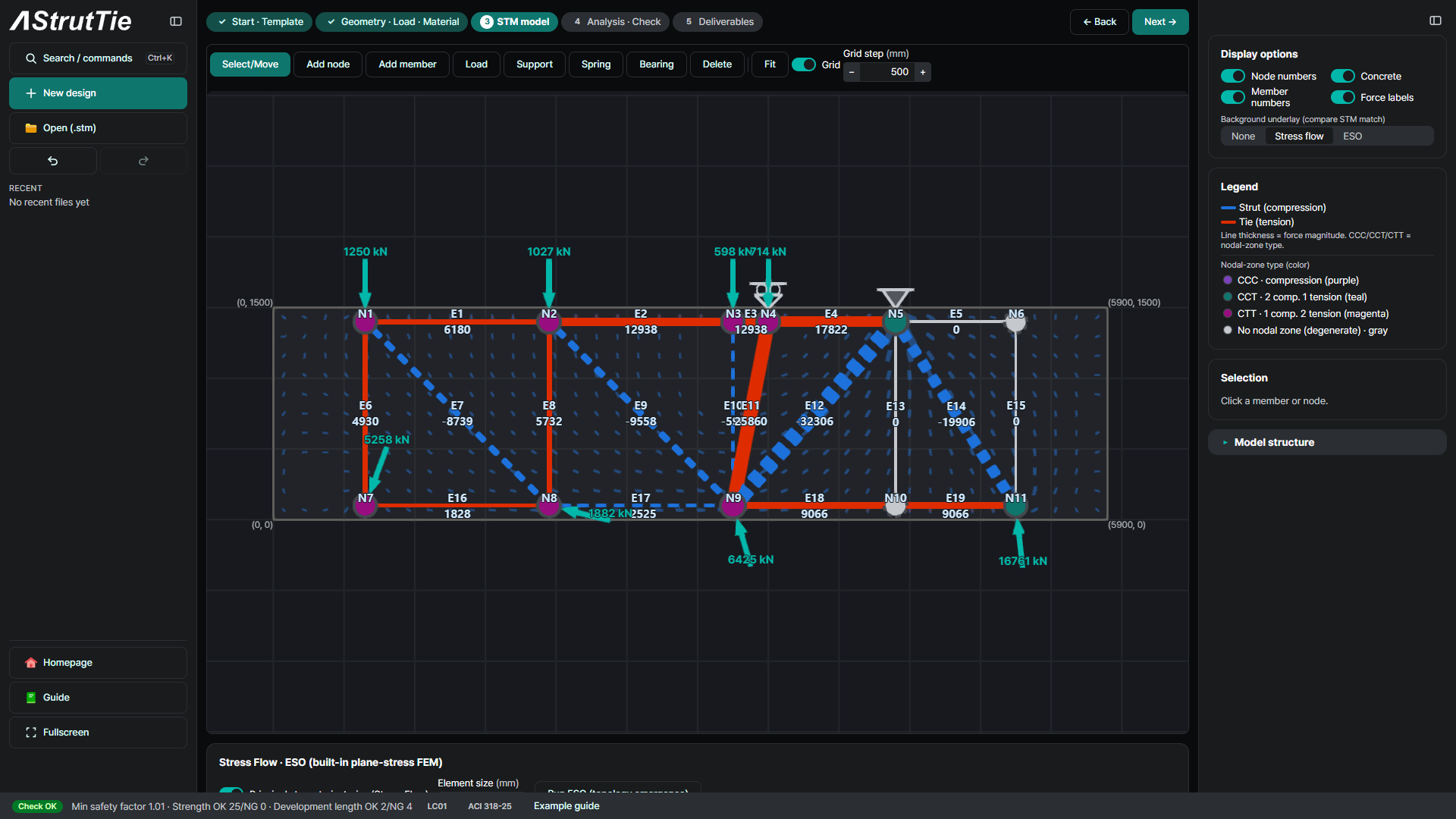
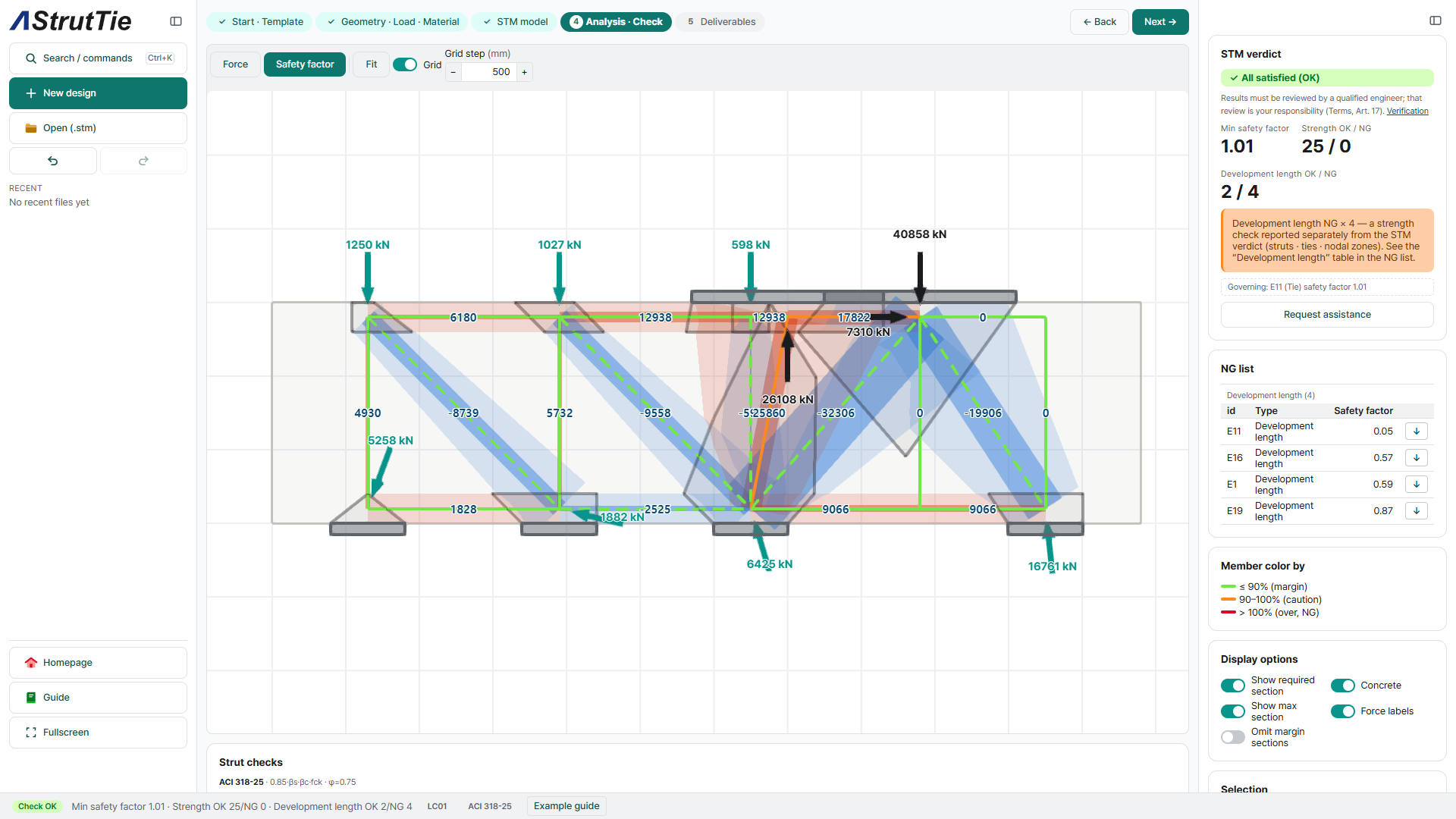
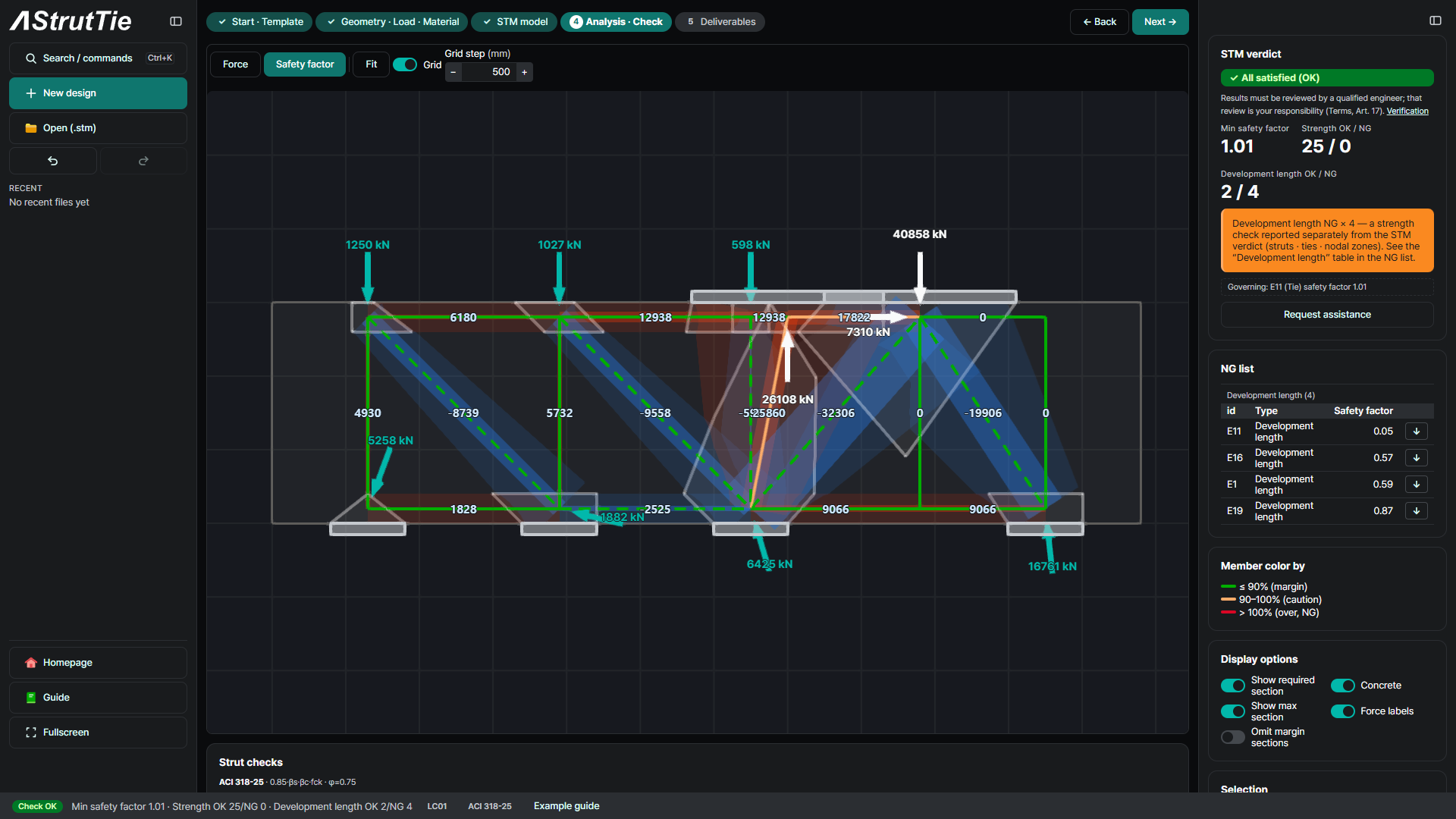
The model is the Technical Book's own final strut-and-tie model, carried into AStrutTie's built-in Example 3.1 file: struts carry the eccentric wall load down to the piles, ties resist the spread and the horizontal thrust, and nodal zones are typed CCC / CCT / CTT.
Analyze & check — every member, every combination
AStrutTie resolves the member forces and checks every member against the code — ties, struts, nodal zones and anchorage — in one pass.
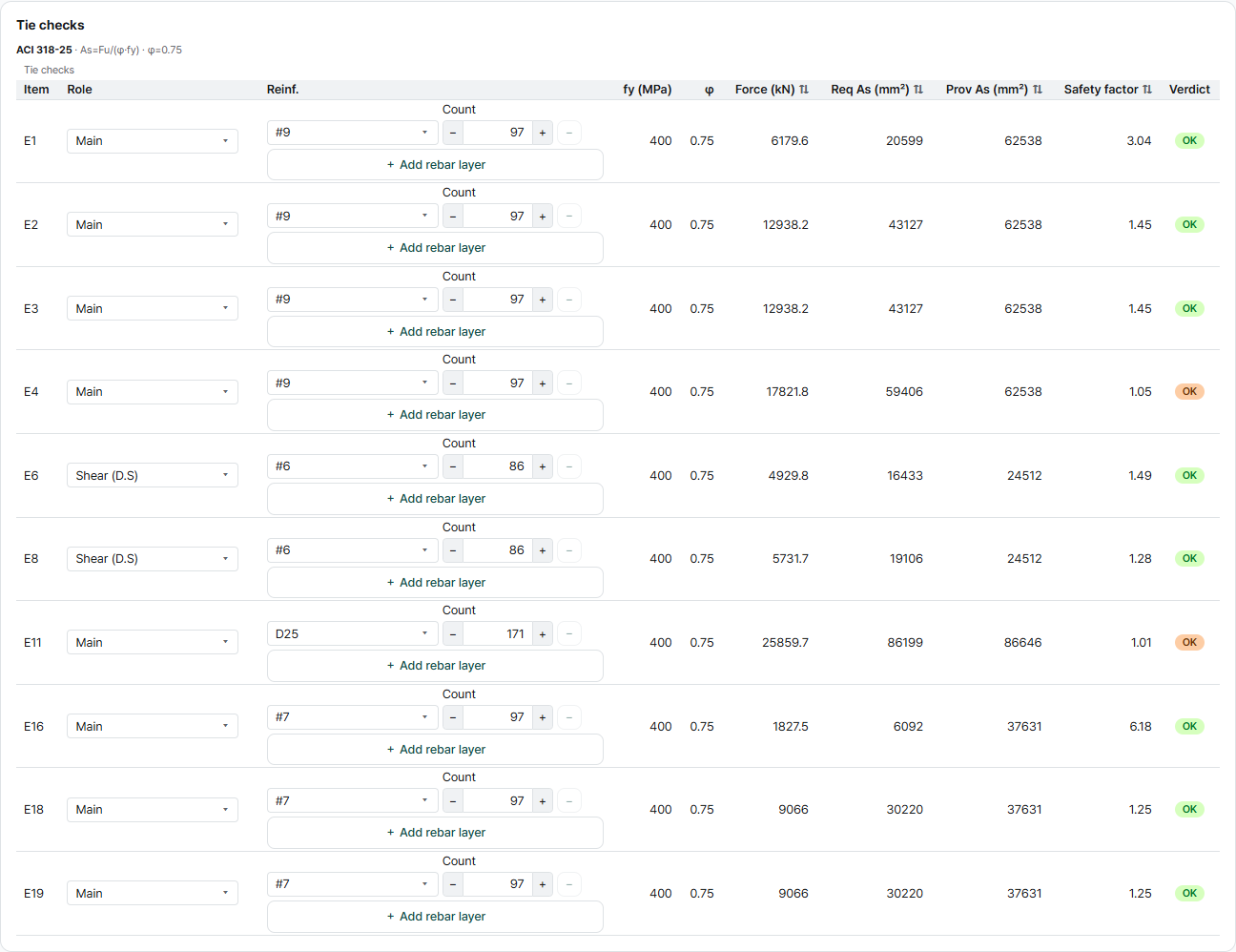
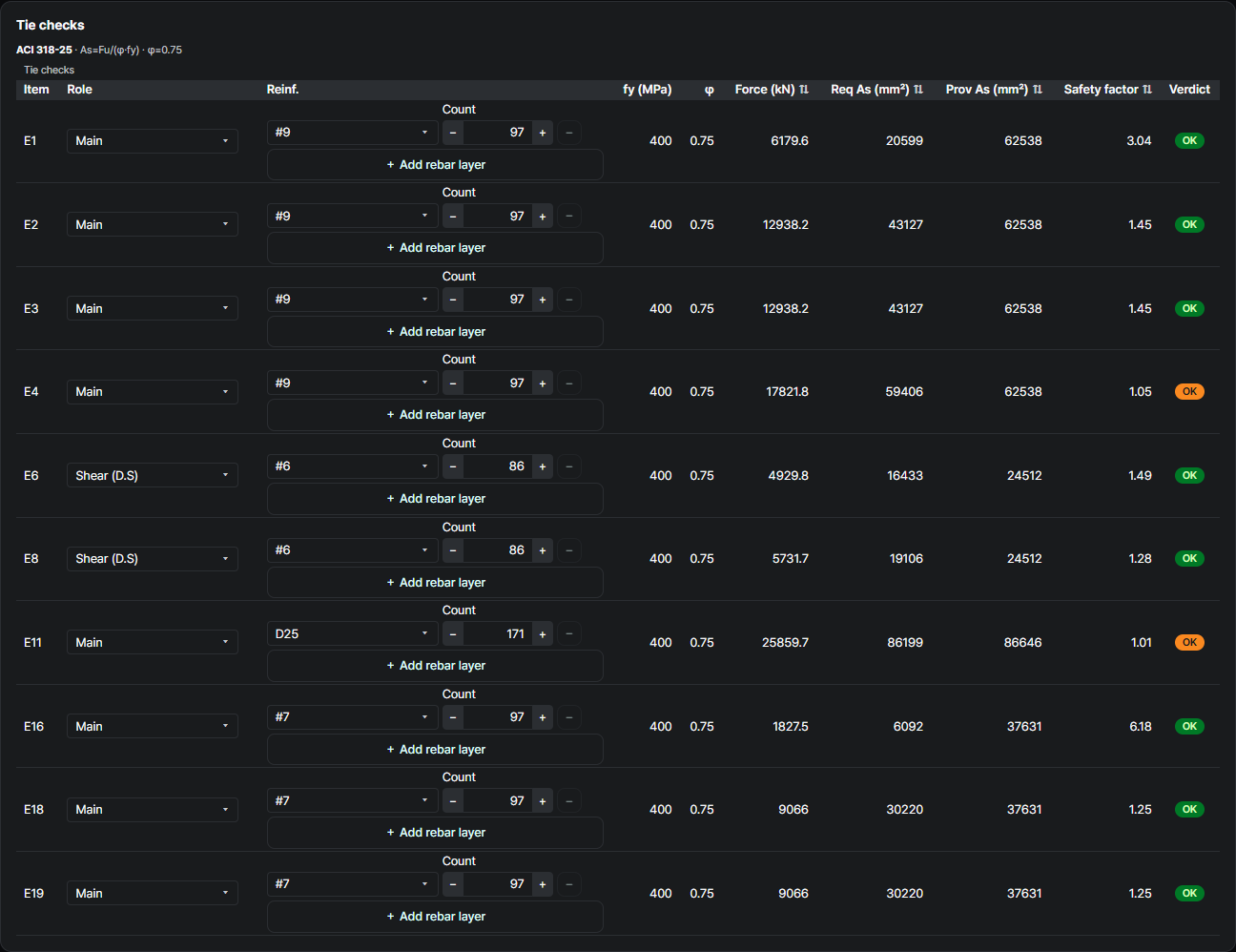
Tie check — required reinforcement
ACI 318-25Required steel As,req is compared with the provided bars (size × count). φ = 0.75, fy = 400 MPa.
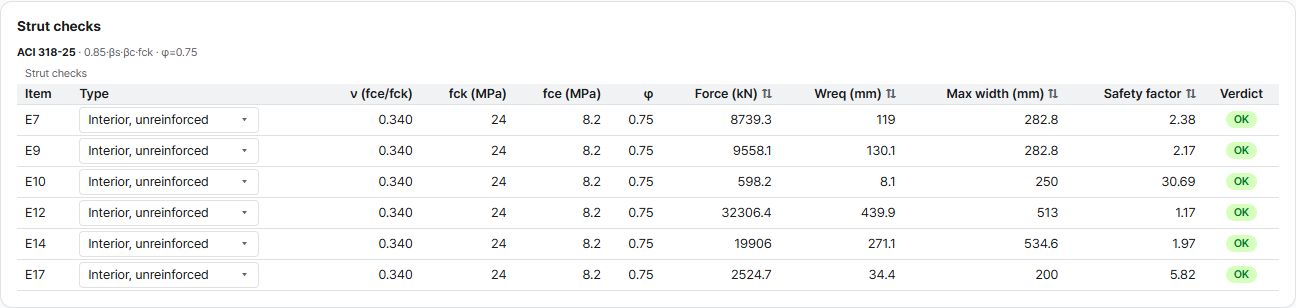
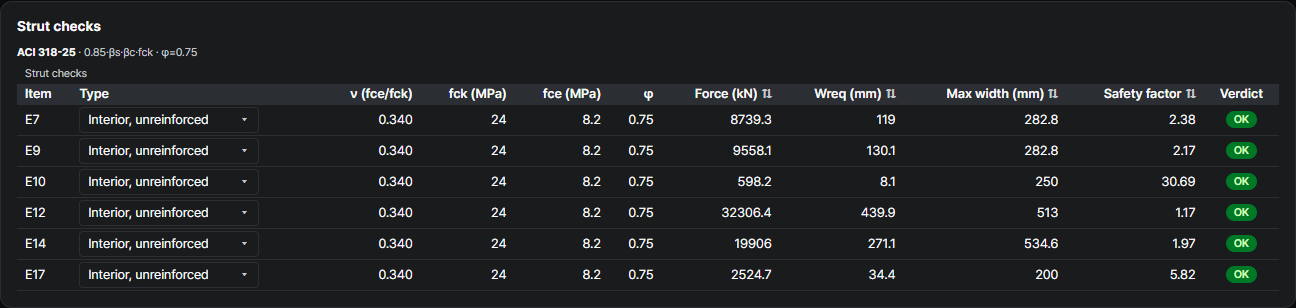
Strut check — effective strength & width
ACI 318-25Effective strength depends on strut type — Boundary (fce = 0.85 fck = 20.4 MPa) or Interior, reinforced (0.637 fck = 15.3 MPa). The required width must fit the available width.
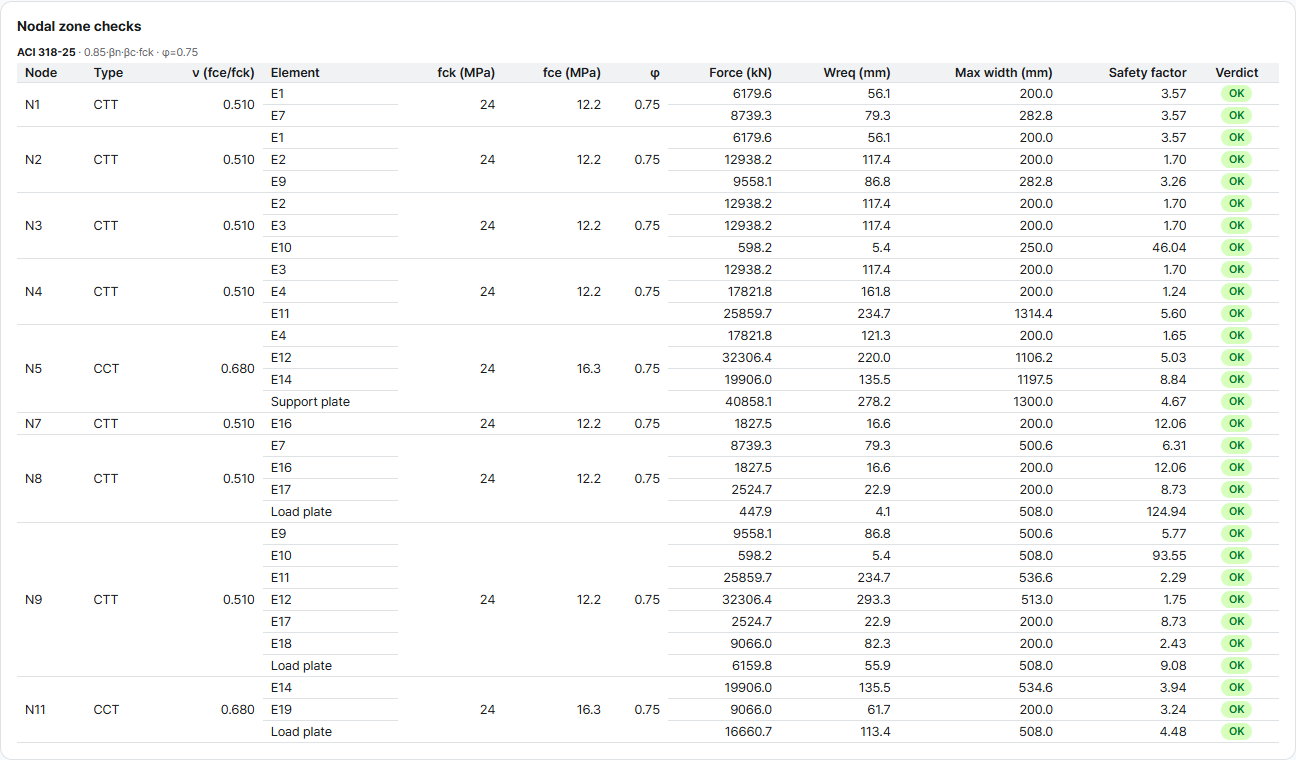
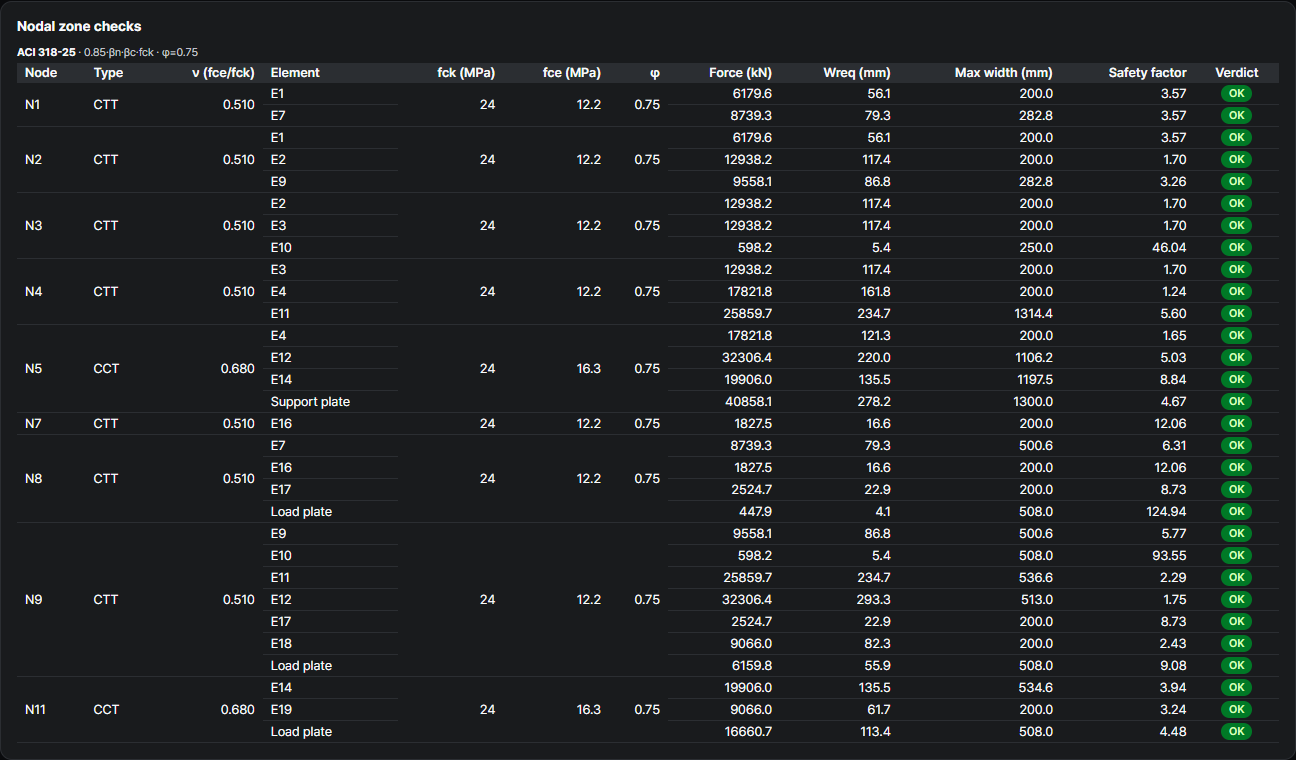
Nodal-zone check — by node type
ACI 318-25| Node | βn | fce (MPa) |
|---|---|---|
| CCC | 1.0 | 20.4 |
| CCT | 0.8 | 16.3 |
| CTT | 0.6 | 12.2 |
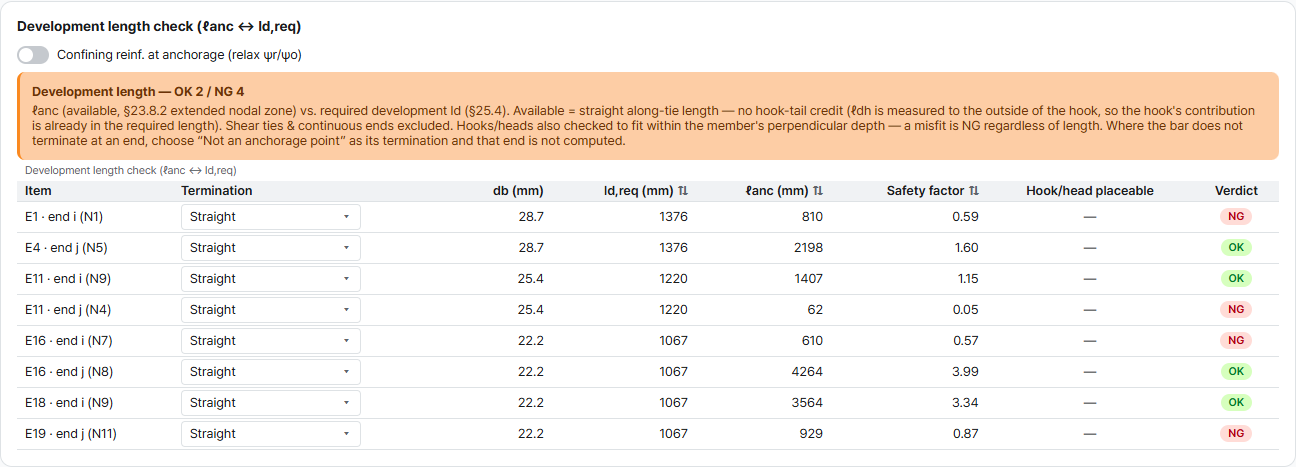
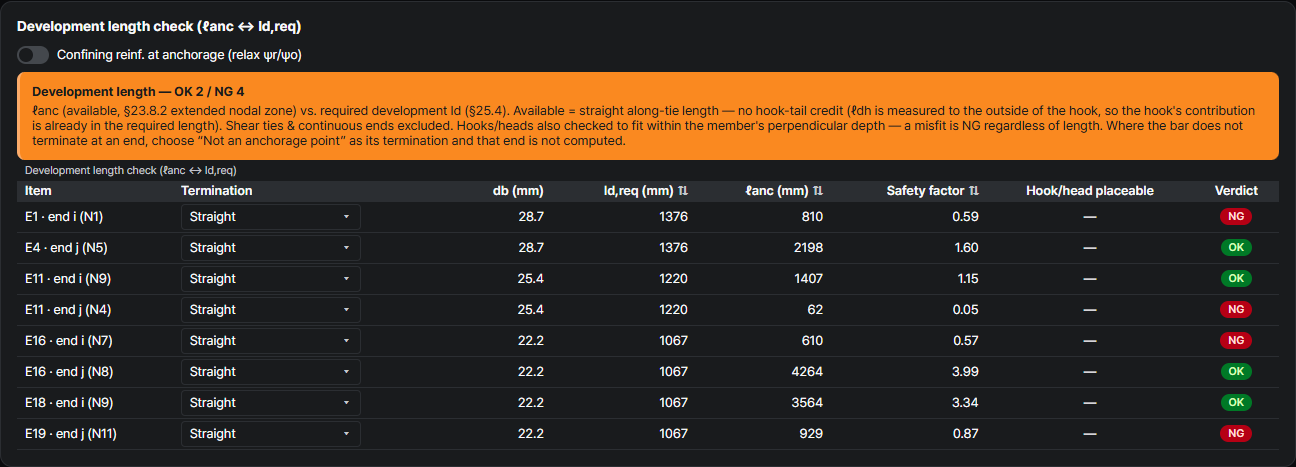
Development length check — anchorage at the node
ACI 318-25 §23.8.2 · §25.4The tie must be anchored at the pile nodes: the available anchorage ℓanc (§23.8.2, extended nodal zone) must reach the required development length ℓd (§25.4). Available = straight length along the tie — no hook-tail credit: ℓdh is measured to the outside of the hook, so the hook's contribution is already in the required length.
These are the same checks AStrutTie runs — the eccentric abutment load path, vertical and horizontal, verified member by member. How we verify →
Try it on your own numbers
Open AStrutTie in your browser, sign in with your email and start from the same template. The Free plan needs no installation and no card.